Legacy of Jürgen Habermas: Bridging Philosophy and Politics
Jürgen Habermas, a pivotal figure in post-war Germany, interwove philosophy with political action, impacting global discourses.
Africa & Global Economy Correspondent

Jürgen Habermas, the distinguished German philosopher and social critic, has passed away at the age of 96. Renowned for his profound impact on post-war European thought, Habermas was more than just a philosopher; he was a bridge between abstract theories and tangible political action. His lifelong work continues to resonate within countless academic and political spheres around the globe.
Philosophical Contributions
Born in Düsseldorf in 1929, Habermas came of age during a time of great turmoil and reconstruction in Germany. He was part of a generation grappling with the remnants of a devastating war and the moral catastrophes that preceded it. Habermas's intellectual journey began in the shadow of these historical complexities, providing him with a unique perspective that informed his later works.
He is perhaps best known for his development of the theory of communicative action, which seeks to explain how rational discourse can lead to mutual understanding and consensus. This theory has not only influenced philosophy but has seeped into fields like sociology, political science, and beyond. The idea posits that democracy is grounded in communicative rationality, a principle that has significant implications for democratic societies worldwide.
Political Engagements
Unlike many philosophers who remain in the ivory tower, Habermas was actively engaged in contemporary social and political issues. In the tumultuous 1960s, he advocated for a critical public sphere where open discourse and public debate serve as the foundation for true democracy. His critique of technocratic governance and emphasis on participatory democracy made him a relevant voice during periods of political unrest across the world.
His political commentaries often extended beyond theoretical propositions to address contemporary issues such as civil rights, privacy, and media integrity. Habermas’s insistence on the moral dimension of political action has had a lasting impact on how policies and political movements are critiqued today.
Impact on Global Thought
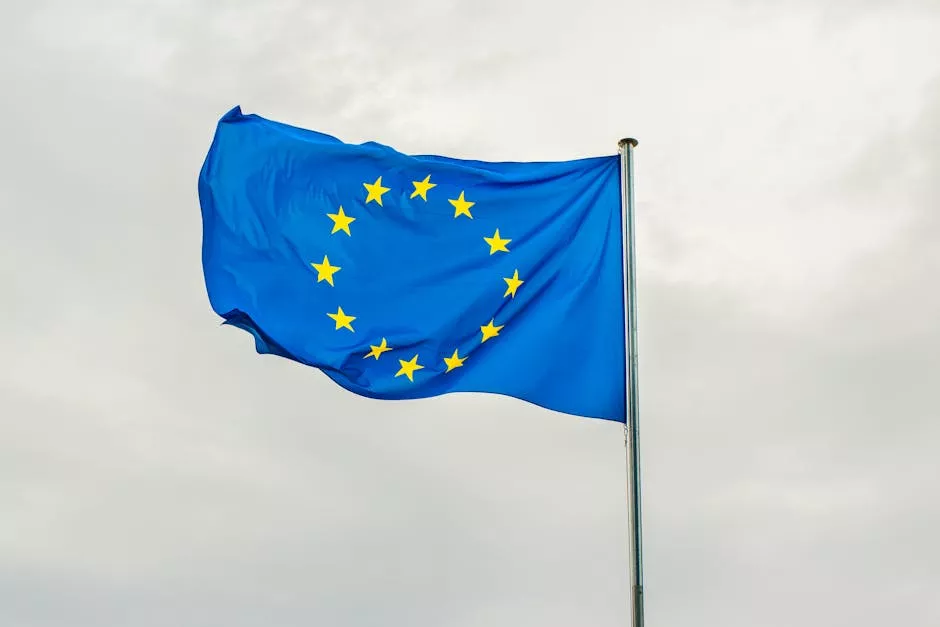
Globally, Habermas's ideas found audiences far beyond academia. In Europe, his work on the legitimacy of the European Union and the need for deeper integration is a consistent reference in debates about the continent's future. His thoughts on global justice and human rights have informed policies and ideological frameworks in international bodies like the United Nations.
His impact is also profoundly felt in the United States, where his work has influenced the development of deliberative democracy and public policy analysis. Habermas’s commitment to dialogue and understanding stands as a counter-narrative to the growing polarization in many Western democracies today.
Legacy and Continued Relevance
As we reflect on Habermas's legacy, it is clear that his ideas remain as pertinent as ever. The challenges of our era, from rising authoritarianism to the erosion of democratic norms, call for renewed attention to Habermasian principles. His life's work underscores the necessity of critical discourse and its role in sustaining democratic principles and human dignity.
As societies continue to evolve and face new challenges, Jürgen Habermas’s ideas offer a blueprint for integrating philosophical reflection with proactive political engagement. His vision of a society where stakeholders engage in rational discourse to resolve conflicts is a powerful antidote to the divides so prevalent in contemporary political landscapes.
Why It Matters
In the grand tapestry of global political thought, Jürgen Habermas represents a vital thread that interweaves the philosophical with the practical. His contributions stand as a testament to the power of ideas to shape not just academic discourse but real-world governance and public policy. As the world grapples with issues of increased polarization, social media influence, and the erosion of public trust in institutions, Habermas's emphasis on communicative action and rational discourse gains renewed importance. This event marks a moment for reflection on how such principles can be applied to address current global and national tensions. Observers and policymakers alike should focus on fostering dialogue and understanding, as these are more crucial now than ever for sustaining democratic ideals and global cooperation.