Germany Protests: Spirited Opposition to AfD's Björn Höcke
Thousands rally in Dortmund against AfD’s Höcke, highlighting tensions over Germany's far-right. A larger protest is anticipated in Düsseldorf.
Senior Geopolitical Analyst
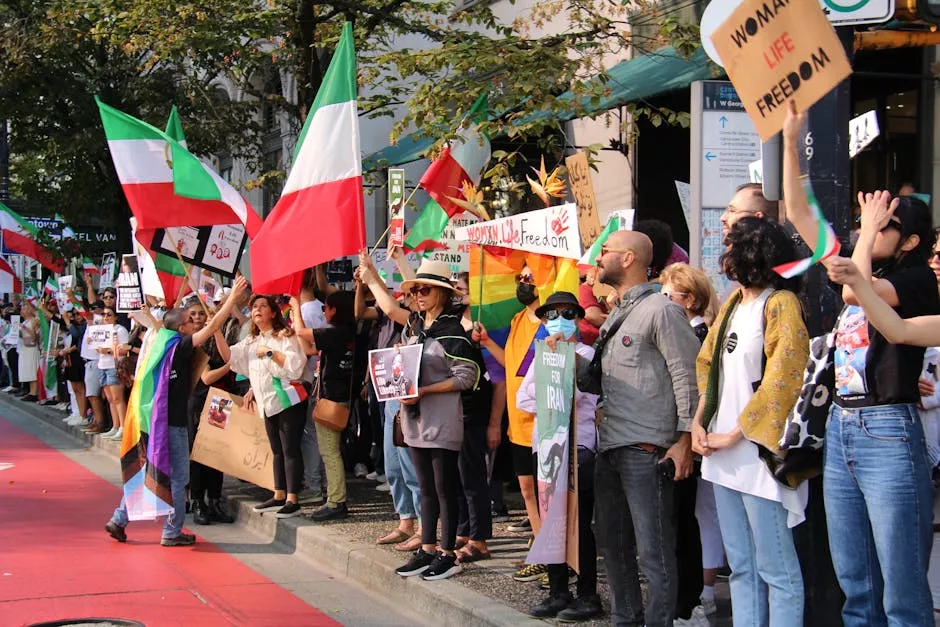
In a mass demonstration of political discontent, more than 3,000 people gathered in Dortmund to protest against the arrival of Alternative for Germany (AfD) politician Björn Höcke at a party event held at the city's town hall on Sunday. The protestors voiced their displeasure at what they perceive to be the encroachment of far-right ideologies represented by Höcke, who is a polarizing figure within German politics known for his controversial positions on immigration and nationalism.
Backdrop of Political Tensions
The protests are set against a backdrop of rising political tensions not only in Germany but across Europe, as populist and right-wing parties gain traction. The demonstration in Dortmund is a precursor to an even larger rally expected in Düsseldorf. Organizers predict a significant turnout as grassroots movements and civic organizations rally citizens to counter the AfD’s increasingly prominent platform.
These events are indicative of broader societal divisions within Germany, a country that is wrestling with its past as well as its position within the global order. The AfD, founded in 2013, initially focused on opposing the European Union's financial policies but has since shifted to a more right-wing nationalist stance. This shift has triggered a wave of controversy and concern among those who fear the erosion of democratic norms and the resurgence of extremist views.
Historical Context and Regional Perspectives
Germany's history casts a long shadow over contemporary politics. The specter of its mid-20th-century totalitarian regimes informs both national policy and the public psyche. As a result, political parties and movements that veer too far to the right are often met with substantial resistance. Protests like those in Dortmund and Düsseldorf reflect this historical sensitivity.
Regionally, the rise of populist parties challenges the cohesion of the European Union. Member states are increasingly grappling with internal political movements that contest EU policies on immigration, integration, and sovereignty. Germany, being the EU’s economic powerhouse, plays a critical role in this dynamic. The domestic response to the AfD is therefore not merely a national issue but one with implications for the entire continent.
Geopolitical Implications
The AfD’s growing influence could potentially alter Germany’s foreign and domestic policies significantly. With hardline stances on immigration, Islam, and European integration, a strengthened AfD could shift the balance in debates within the Bundestag, Germany’s federal parliament.
Germany's stance on various geopolitical issues, from Russian sanctions to EU economic policies, could become more isolationist or aggressive, depending on how much more political power the AfD accrues. Given Germany's central role in NATO and the EU, any significant policy shifts could ripple across borders, affecting alliances and economic partnerships worldwide.
Furthermore, as Germany is seen as a bastion of liberal democracy in Europe, the rise of a party like the AfD may embolden similar movements elsewhere, potentially leading to a more fragmented political landscape across the continent.
Why It Matters
The protests against Björn Höcke and the AfD highlight a critical juncture for Germany at both a domestic and international level. Domestically, the clash between the AfD and its opponents underscores a broader societal struggle over identity, history, and the future direction of the country. Internationally, Germany's response to its far-right elements has significant implications for European unity and the global push for democratic norms.
As Germany grapples with its history and role as a leading European power, the world watches closely. A shift towards more nationalist policies could destabilize the careful balance of power within the EU and NATO, affecting international trade, security policies, and diplomatic relations. Observers should monitor the unfolding political landscape in Germany as the outcomes will resonate far beyond its borders, potentially setting precedents for how other democracies counter similar populist waves.