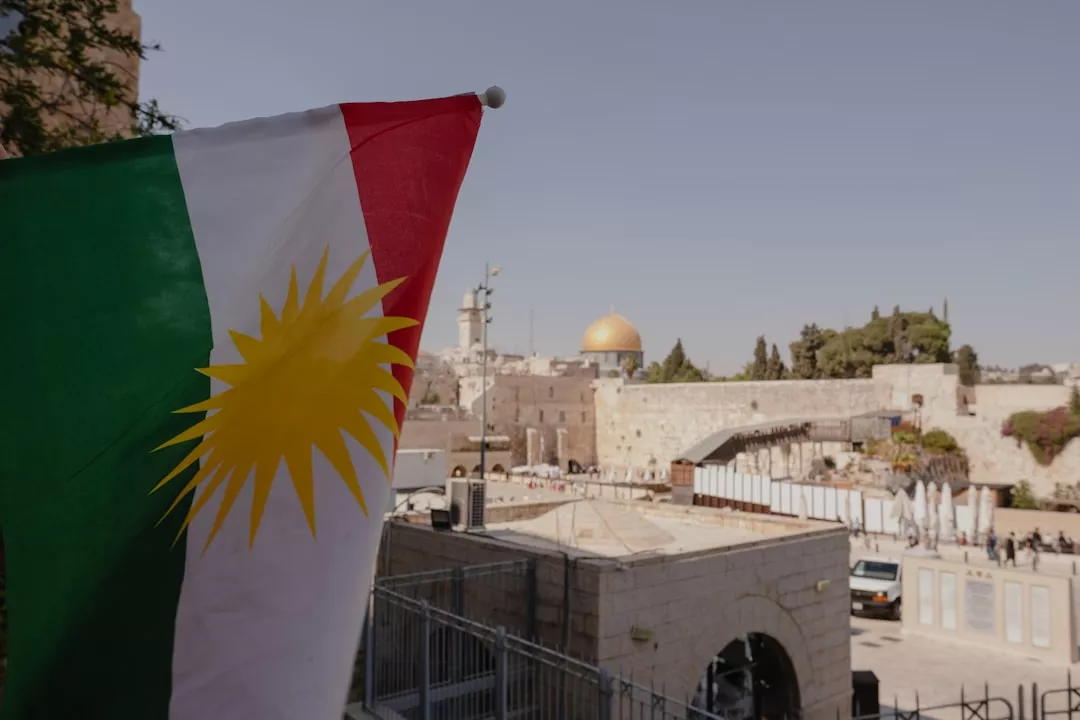
U.S. Embassy Services Begin in West Bank Settlement, Stirring Debate
The U.S. opens embassy services in a West Bank settlement, sparking debate over its impact on Israeli-Palestinian relations and regional dynamics.
Africa & Global Economy Correspondent

Introduction
The recent decision by the United States to offer embassy services in a West Bank settlement marks a significant milestone in the long-standing Israeli-Palestinian conflict. This move, viewed by many as a step towards legitimizing Israeli settlements, has generated substantial domestic and international debate.
Context and Background
The Israeli-Palestinian conflict is rooted in decades of territorial disputes and political tensions. The West Bank, captured by Israel during the 1967 Six-Day War, remains a focal point of contentious negotiations. While Israel maintains control over parts of this region, most of the world, including the United Nations, considers the Israeli settlements there illegal under international law.
Historically, U.S. foreign policy has avoided establishing official diplomatic services in these areas. This recent decision marks a departure from previous administrations, signaling a potential shift in diplomatic strategies
Regional Reactions and Perspectives
Israeli Viewpoints
Within Israel, reactions to the U.S. decision are divided. Right-wing factions view this as a victory, aligning with their longstanding belief that Israeli sovereignty extends over these territories. Meanwhile, left-wing Israelis, who support a two-state solution, argue that this undermines peace efforts by legitimizing settlements and complicating future negotiations.
Palestinian Responses
Palestinian leaders have voiced strong opposition, perceiving this move as a direct challenge to their claims for statehood. They fear it could set a precedent that emboldens further territorial encroachment by Israel, complicating the pursuit of a viable and sovereign Palestinian state.
International Community
The international community is equally polarized. While some nations view this as a pragmatic approach favoring stability, many European and Middle-Eastern countries see it as undermining international law and the broader peace process. The United Nations continues to call for adherence to previously agreed frameworks, urging diplomatic engagement rather than unilateral actions.
Geopolitical Implications
This U.S. decision bears considerable geopolitical weight. In a region fraught with delicate alliances and historical grievances, shifts in foreign policy have the potential to alter regional dynamics significantly. The move could realign relationships between the U.S. and key players in the Middle East, including Israel, Palestine, and other neighboring Arab states.
Furthermore, it places additional pressure on the Biden administration to balance domestic political interests with international ones, particularly at a time when U.S. involvement in global affairs is under intense scrutiny.
This development could also influence future negotiations by reshaping the negotiation table, pressuring other international stakeholders to clarify their positions and potentially adapt policies in response.
Conclusion
The introduction of U.S. embassy services in a West Bank settlement reflects an evolving geopolitical landscape, shaped by domestic interests and international pressures. While it may enhance bilateral relations between the U.S. and Israel, it also risks drawing further contention in an already volatile region. As global leaders navigate this complex terrain, the outcomes of such decisions may redefine diplomatic engagement in the Middle East for years to come.
Why It Matters
The U.S. decision to introduce embassy services in a West Bank settlement carries broad geopolitical significance. This move is not only symbolic but also conveys a strong political message regarding the U.S. stance on Israeli territorial claims. It could increase tensions in an already fragile region, affecting international diplomatic relations. Critics argue that it undermines the prospects for peace, whereas proponents suggest it could provide new opportunities for local engagement and development. Observers should monitor how this development influences not only Israeli-Palestinian negotiations but also broader U.S. foreign policy objectives in the Middle East.