U.S. Ambassador's Israel Remarks Spark Wide Arab Outrage
The U.S. Ambassador's comments on Israeli territorial claims based on Biblical grounds ignite condemnation across Arab and Muslim nations.
Senior Geopolitical Analyst

The recent comments by U.S. ambassador Mike Huckabee on Israel's territorial rights have sparked a significant wave of condemnation from Arab and Muslim nations. The ambassador suggested that Israel would be justified in claiming large swathes of the Middle East on Biblical grounds, a statement that has inflamed tensions in the already volatile region.
Historical Context
The complex geopolitical landscape of the Middle East is deeply rooted in historical conflicts and territorial disputes. The land now called Israel has been the site of numerous civilizations and empires, each leaving its mark on the land and its people. The modern State of Israel was established in 1948, leading to several wars with neighboring Arab countries. These conflicts have necessitated a politically delicate balance of power in the region, with the United States playing a central role in brokering peace and supporting Israeli sovereignty.
Regional Perspectives
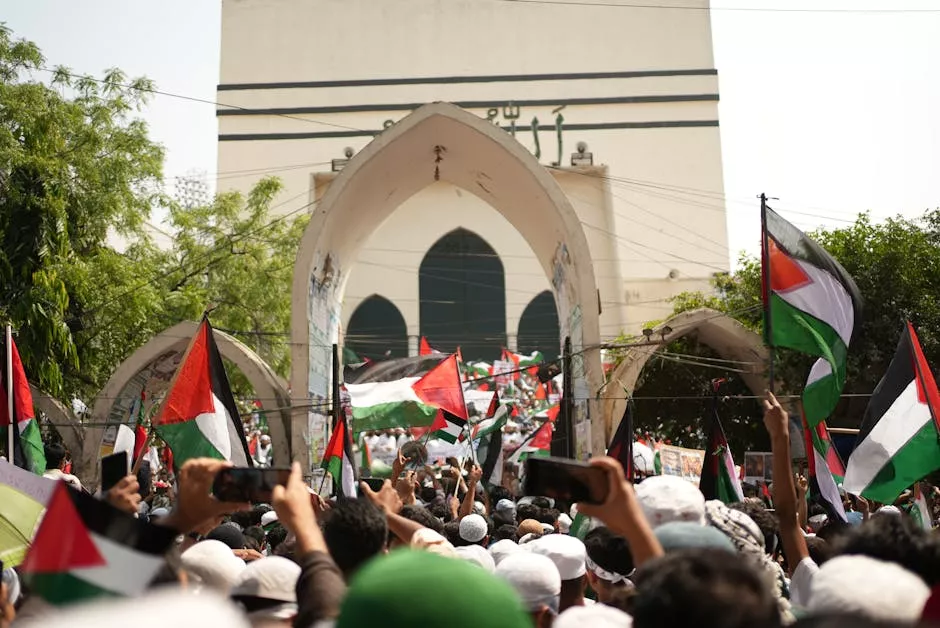
Arab nations and the wider Muslim world view Huckabee's comments as a direct challenge to the existing international consensus that advocates for a two-state solution to the Israeli-Palestinian conflict. The Palestinian leadership, in particular, has denounced the statement as an affront to their aspirations for statehood. The Organization of Islamic Cooperation (OIC) and the Arab League have both issued statements describing the remarks as inflammatory and capable of exacerbating existing tensions.
Leaders in Iran, Saudi Arabia, and Egypt have also condemned the ambassador's comments, highlighting the potential for destabilization and the undercutting of ongoing diplomatic efforts aimed at regional peace. The Iranian Foreign Ministry spokesperson referred to the comments as part of a broader pattern of provocative U.S. foreign policy decisions in favor of Israel.
Geopolitical Implications
These comments occur at a particularly sensitive time, as relations between Israel and some Arab nations have been improving gradually through agreements like the Abraham Accords. Nations involved in these agreements, such as the United Arab Emirates and Bahrain, may find themselves facing internal and external pressures to respond decisively against such diplomatic statements that appear to support expansive Israeli territorial claims.
If such sentiments were officially endorsed as U.S. policy, it could threaten existing peace agreements and lead to a reshuffling of alliances and partnerships in the Middle East. Additionally, global powers such as Russia and China could exploit the resultant diplomatic rifts, potentially altering the geopolitical balance in the region.
Meanwhile, domestic reactions within Israel are mixed, as some factions view the ambassador's comments as support for expansionist ideologies, while others express concern over the international repercussions of such statements.
The Role of Diplomacy
In light of the condemnation, intermediary states may find renewed impetus to engage in shuttle diplomacy to reduce tensions. The European Union, often acting as a mediator in Middle Eastern affairs, might increase its diplomatic efforts to reaffirm international support for a negotiated settlement to the Israeli-Palestinian conflict.
This development underscores the importance of nuanced and careful diplomatic communications, with potential lessons for all parties involved in Middle Eastern geopolitics.
Why It Matters
The recent comments by the U.S. ambassador underscore the persistent challenges in Middle Eastern diplomacy, especially in navigating historical claims and modern state politics. This situation highlights the crucial role the United States plays in maintaining stability in the region, and any deviation from established diplomatic lines can have wide-ranging consequences. The uproar among Arab and Muslim nations indicates the critical importance of perceived U.S. neutrality, particularly regarding territorial matters that could inflame nationalistic sentiments. This event should remind observers of the fragile nature of Middle Eastern alliances and the need for carefully considered diplomatic statements. Watch for potential shifts in regional alliances and increased diplomatic efforts from other global powers to capitalize on rifts caused by such controversial U.S. positions.