Iranians Caught Between Fragility: Navigating 'No War, No Peace'
Tehran's citizens face a precarious balance amid a fragile truce, dealing with significant economic challenges and geopolitical uncertainties.
Africa & Global Economy Correspondent
The Hinterland of Uncertainty
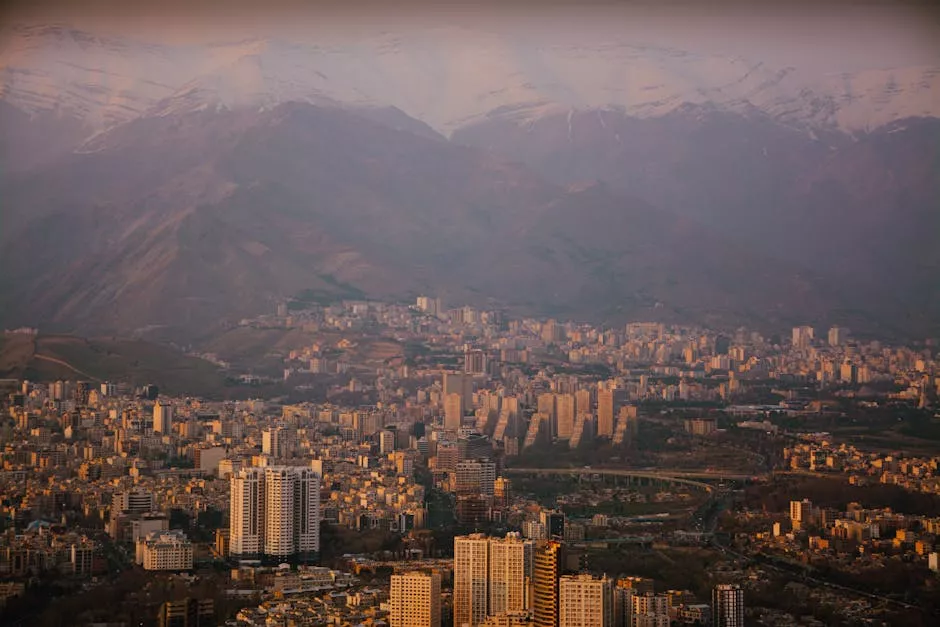
In the bustling streets of Tehran, the mood is subdued, even as life continues in a unique state of flux. The inhabitants of Iran's capital find themselves navigating a precarious position marked by the absence of war but devoid of peace. This uncertain equilibrium is rendering Tehran's populous into an evolving, unpredictable landscape shaped by hurtling economic challenges and latent geopolitical tensions.
A Precarious Peace
Historically, Iran has been a focal point in Middle Eastern geopolitics, entrenched in various regional and international disputes. Over the decades, it has experienced prolonged periods of conflict, both wars and economic embargoes, leading to a landscape where survival means constantly adapting to policies and realities imposed from external forces.
Following the Joint Comprehensive Plan of Action (JCPOA) in 2015, there was a glimmer of potential economic revival. However, the Trump administration's withdrawal from the deal in 2018 and the subsequent 'maximum pressure' sanctions have left Iran grappling with economic fragmentation. Today, the Biden administration's approach, while softer, has not quite returned the situation to the earlier optimism of the mid-2010s.
Economic Repercussions
Iran's economy, heavily reliant on oil exports, has been severely affected by sanctions, which have crippled its capacity to trade freely. This squeeze has cascaded down to ordinary Iranians, whose daily lives are entangled with issues like rising inflation, unemployment, and a weakened currency.
Small businesses and entrepreneurs are particularly vulnerable, facing logistical nightmares in importing goods or finding markets abroad. The inability to access global financial systems has effectively isolated the country economically, contributing to societal strain and unrest.
Regional and Global Alliances
Regionally, Iran maintains an influential position within the Middle East, supported by alliances with groups in Lebanon, Iraq, and Syria. These relationships serve as both assets and liabilities. While providing strategic depth, they also attract regional adversaries keen to counterbalance Iranian influence, fostering a cycle of proxy battles and diplomatic stand-offs.
Globally, Iran's relations with non-Western powers, such as Russia and China, offer alternative strategic partnerships that counterbalance Western influence and provide economic and technological assistance when traditional routes are obstructed.
The People’s Endurance
For Tehran's residents, resilience is woven into the fabric of daily life. Cultural richness, community solidarity, and adaptive resourcefulness allow survival in challenging times. Universities and innovation hubs continue to thrive, a testament to the ingenuity that persists despite hardships.
The youth, particularly, embody a profound duality: while restricted by current regimes and reduced global connectivity, they're also increasingly savvy, engaged with global cultures, and yearning for more openness and opportunity.
Geopolitical Implications
The international community is watching closely as Iran navigates these tumultuous waters. Iran's situation presents continuous challenges for global oil markets, nuclear non-proliferation dynamics, and Middle Eastern stability.
The tensions spill over into global diplomacy, affecting trade negotiations, defense alignments, and global oil prices. As Iran continues to be a linchpin in numerous geopolitical equations, understanding these dynamics helps in anticipating future international developments.
Why It Matters
Why It Matters
The situation in Iran is emblematic of broader geopolitical trends — illustrating how multilateral agreements and sanctions shape national destinies and regional alignments. As Iran grapples with its isolation, it pivots towards new alliances and internal developments, shaping a multipolar global order. The outcome could redefine trade routes, energy markets, and diplomatic priorities globally. Observers should watch for shifts in Iran's foreign policy, technological partnerships, and economic reforms as indicators of its future trajectory.