Ukrainian Resilience: Mapping Russia's Advancing Front
Explore how Ukraine's strategic resilience has slowed Russia's advances on the battlefield, shifting geopolitical balances in Europe.
Senior Geopolitical Analyst

The ongoing conflict between Russia and Ukraine has continued to transform the geopolitical landscape of Eastern Europe. Since its inception in 2014, with the annexation of Crimea, the war has evolved, seeing significant developments over the past few months as both nations leverage various strategies to gain advantage. In this dynamic struggle, the use of maps becomes crucial in understanding the shifts on the ground and the global reverberations of these military movements.
Russia’s Incremental Advances
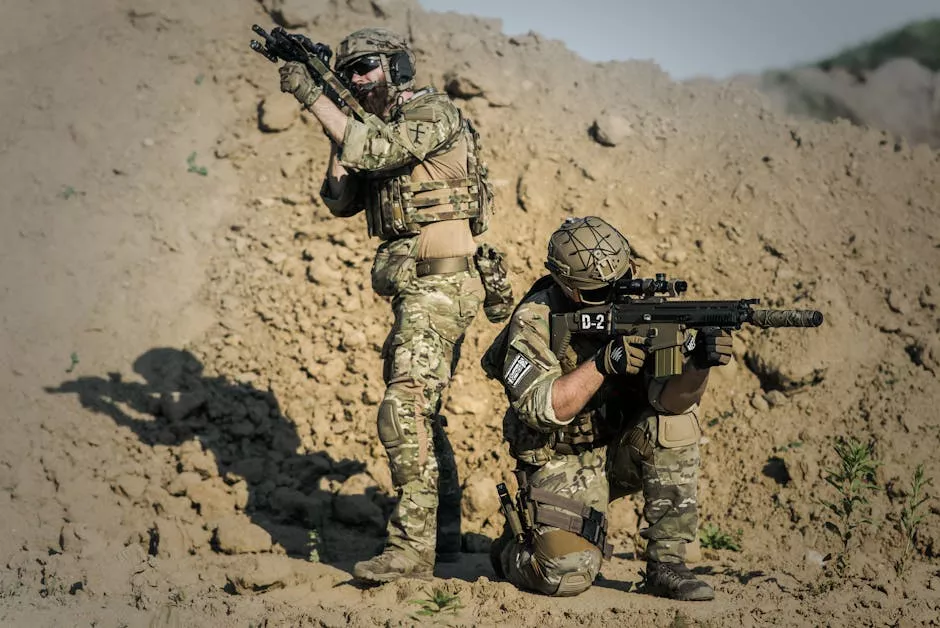
In recent months, Russia has made slow but steady gains on various fronts in Ukraine. This trend is most visible in the eastern regions of the country, particularly around the Donbas area, long a focal point for Russian initiatives. The capture of critical territories reflects not only military tactics but also a broader strategy aimed at securing a land corridor to Crimea. Despite these advances, Russian forces face fierce resistance from Ukrainian units that have fortified positions, utilizing a combination of local knowledge and Western military aid to stem the Russian tide.
Strategic Strongholds
Ukrainian defense strategies have focused on maintaining control over key areas around Kramatorsk and Sloviansk, crucial for logistical support and transportation networks. By reinforcing these strategic strongholds, Ukraine aims to disrupt Russian supply lines and prolong engagements to its advantage, resisting complete capture.
Technological Warfare: The Cyber Front
A significant dimension of the conflict has been the technological warfare that accompanies ground operations. Both Ukraine and Russia have invested considerably in cyber capabilities. On one hand, Russia continues to use cyber attacks to disrupt Ukrainian infrastructure and communication. On the other hand, Ukraine, with international support, is enhancing its cyber defenses, making attacks increasingly less effective.
Western Support and Its Implications
Western nations, led by the United States and the European Union, have played a pivotal role in this conflict through the provision of military aid and diplomatic support to Ukraine. Sophisticated weaponry and intelligence have significantly bolstered Ukrainian defenses, compensating somewhat for the numerical superiority of Russian forces. This assistance, however, has further complicated relations between Russia and the West, rekindling a Cold War-like atmosphere of tension and suspicion.
Historical Context and Regional Dynamics
The roots of the current conflict can be traced back to Ukraine's desire to seek closer ties with Western Europe and NATO, a move perceived by Russia as a threat to its historic sphere of influence. The geopolitical chess game between maintaining independence and territorial integrity versus succumbing to Russian influence has historic underpinnings that date back to the Soviet era, and which have been reignited with renewed vigor in the current decade.
Regionally, neighboring countries are closely watching developments. Poland, the Baltic states, and other Eastern European nations are particularly wary of Russian aggression spilling over their borders, prompting increased NATO presence and readiness exercises to deter potential expansionist moves.
The Geopolitical Implications
The implications of the conflict extend far beyond mere territorial changes. The war in Ukraine has called into question the underlying principles of international law, specifically the inviolability of borders. Global superpowers are thus drawn to the conflict not only by alliances and political commitments but also by a broader interest in ensuring a rule-based international order persists.
Furthermore, the conflict impacts global energy markets, as both Russia and Ukraine play significant roles in Europe's energy supply. Disruptions in this sector due to sanctions and military actions have prompted Europe to seek energy diversification, reshaping energy partnerships and futures.
Potential Long-term Outcomes
Should Russia continue its incremental gains, it might cement influence over significant portions of Ukraine, which could lead to a de-facto division akin to post-war Germany. Such a scenario would require delicate diplomatic negotiations to avoid further escalation. Conversely, a stalemate could lead to protracted instability, affecting regional and global peace.
Why It Matters
Why It Matters: The conflict's impact is profound, altering not just the regional politics of Eastern Europe but also global geopolitical dynamics. Its importance lies in testing the strength of international alliances, resilience of multilateral frameworks, and the commitment to uphold sovereignty in the face of aggression. As Russia seeks to reassert dominance, Western nations are reaffirming their dedication to a rules-based order, with potential implications for conflicts worldwide. Observers should closely watch NATO's strategic decisions and Europe's energy realignments, which will hint at broader geopolitical trends and future stability in the region.