Hungary's EU Flag Gesture: A New Chapter in EU Relations?
The appearance of the EU flag outside Hungary's parliament marks a potential pivot in Hungary's stance after years of tension with Brussels.
International Relations Correspondent

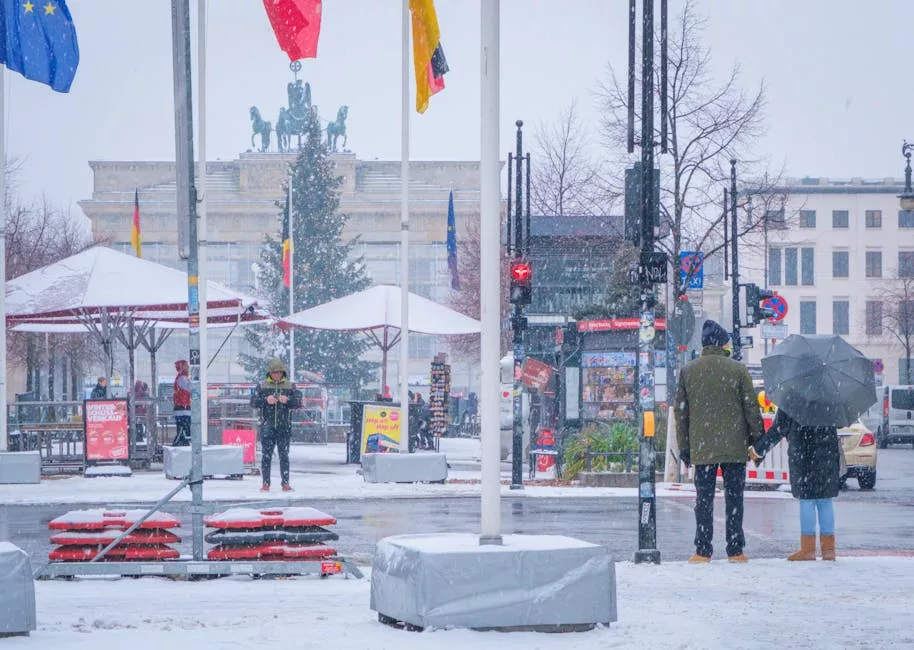
The relationship between Hungary and the European Union (EU) has long been characterized by tension, particularly under the leadership of Prime Minister Viktor Orban. However, a recent development suggests that Hungary might be reassessing its confrontational posture towards Brussels. The European Union flag, now prominently placed alongside the Hungarian national flag outside the parliament building, signifies a potential shift in the country’s political trajectory.
For over a decade, Viktor Orban’s government has been at odds with the EU on various critical issues, ranging from migration policies to democratic principles. Hungary’s consistent challenges to EU policies have sparked debates about its role within the bloc, raising questions about its commitment to shared European values. Orban has often criticized what he views as the EU’s infringement on national sovereignty, emphasizing a narrative that champions Hungary's unique identity and policy choices.
Historical Context
The strained relationship can be traced back to Hungary’s controversial domestic policies, which the EU has frequently challenged. Brussels has expressed concerns about Hungary’s media laws, judicial reforms, and treatment of NGOs. These disputes have led to several infringement procedures and even the invocation of Article 7, which could potentially strip Hungary of its voting rights within the Council of the EU.
Moreover, Hungary’s refusal to align with the EU’s stance on key issues, such as the refugee crisis and the Ukraine conflict, exacerbated the friction. The Hungarian government’s frequent use of its veto power to block EU measures, specifically those involving sanctions on Russia and policies for deeper integration, further strained relations.
Regional Implications
The decision to fly the EU flag might not just be a domestic shift but could also have regional implications. As part of the Visegrád Group, alongside Poland, Slovakia, and the Czech Republic, Hungary has often formed a bloc to counterbalance some of the central EU policies. A pivot in Hungary's EU approach could unsettle this alliance, creating new dynamics in Central and Eastern Europe.
Additionally, by appearing more open to dialogue with Brussels, Hungary might be seeking to rebuild its image within the EU, possibly to leverage better terms in negotiations over post-pandemic recovery funds and other economic supports. The economic benefits of aligning more closely with EU principles cannot be underestimated, given the financial entanglements and opportunities within the union.
Geopolitical Implications
Geopolitically, this shift could also recalibrate Hungary’s external relations. While the country has often leaned towards Moscow on several issues, a renewed commitment to EU ideals might alter its foreign policy stance, affecting relations not only with Russia but also with neighbouring EU states.
Analysts believe this move could be interpreted as Hungary positioning itself as a moderating influence or even a bridge between Eastern and Western Europe, highlighting a nuanced strategy that seeks to maximize benefits while minimizing political costs.
Ultimately, the symbolism of the European Union flag in Budapest reflects deeper potential shifts in Hungary's international policy orientation. Whether this is a strategic ploy or an indication of genuine policy evolution remains to be seen.
Why It Matters
This development is significant because it indicates a potential recalibration in one of the EU's most contentious internal relationships. Hungary's gesture of displaying the EU flag could signal an intent to mend fences with Brussels, possibly driven by economic imperatives and a broader recognition of the geopolitical challenges facing the EU. If Hungary continues on this trajectory, it could lead to a thawing of relations not only with the EU but also influence its broader international stance. This change could impact EU cohesion and policies, particularly on how the bloc manages dissent within its ranks and how it collectively engages with external threats and opportunities. Observers should monitor forthcoming Hungary-EU interactions and any policy changes that might follow.