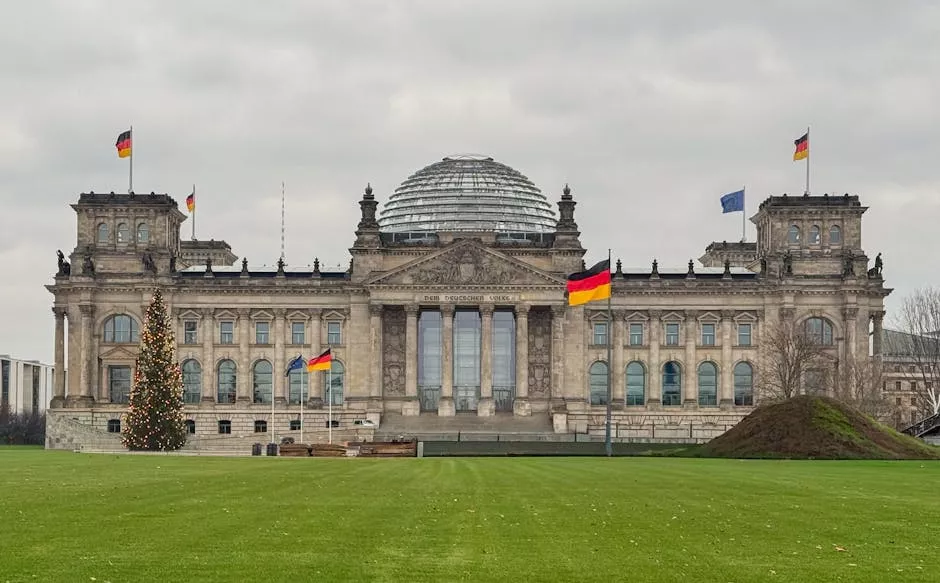
Europe Pursues Independence from US and China Influence
Germany's chancellor aims to reduce Europe's dependence on China and the US amid geopolitical shifts.
International Relations Correspondent
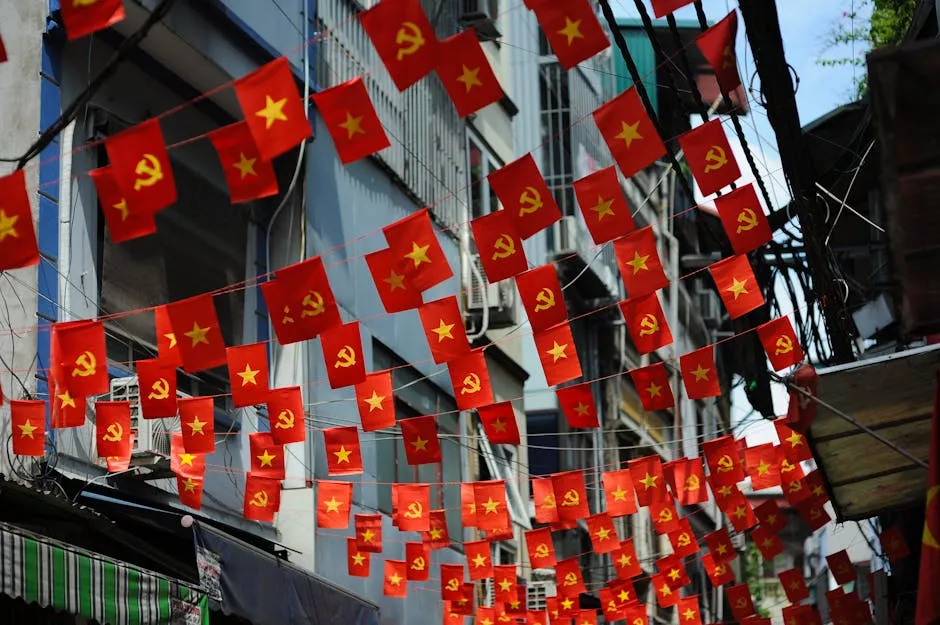
The Challenge of Reducing Dependence
In an increasingly multipolar world, Germany's chancellor is advocating for Europe to reduce its reliance on economic giants China and the United States. Speaking candidly, he underscores a broader strategy to cultivate Europe's autonomy amidst fast-evolving global power dynamics. This pursuit presents both opportunities and challenges, especially as it intersects with the interests of European businesses deeply enmeshed with these two major economies.
Historical Context and Economic Entanglement
Historically, Europe's economic growth has been bolstered significantly by strong trade ties with both China and the US. China, which became the EU's largest trading partner in 2020, offers a vast market and a crucial manufacturing hub. Meanwhile, transatlantic economic bonds have been foundational ever since the post-World War II reconstruction period, key to Europe's sustained prosperity and security alignment.
In recent years, however, the geopolitical landscape has shifted. The US, under different administrations, has oscillated in its trade policy priorities, with the Trump era marking a stark departure towards protectionism and unpredictability. China, for its part, has asserted its influence through initiatives like the Belt and Road Initiative, extending its economic reach into Europe. These dynamics compel Europe to reassess its strategic dependencies.
Europe's Strategic Redirection
Germany, under its current leadership, is spearheading a movement for Europe to bolster self-reliance, innovate, and diversify economic partnerships. This policy shift involves reinforcing intra-European trade, investing in indigenous technological advancements, and developing alternative supply chains less susceptible to geopolitical upheavals.
Yet, the appetite for such a reorientation varies across Europe. Countries with significant economic transactions with China, like Germany and Italy, exhibit greater hesitancy. For many European industries, particularly automotive and manufacturing sectors reliant on Chinese raw materials and markets, disentangling supply chains could prove disruptive.
The situation is further complicated by the US’s strategic maneuvers in Europe, encompassing military, technological, and economic spheres. The recent Inflation Reduction Act and other fiscal policies aim to contain China's influence yet also subtly pressure Europe to align more closely with US policies.
Business Sector Perspectives
Despite political momentum, European business leaders express less enthusiasm for a complete strategic pivot. There exists a palpable tension between political ideology and economic pragmatism. Companies that have thrived in the globalized, interdependent marketplace express caution, wary of alienating critical markets and enduring possible economic retaliations.
European industries are at a delicate juncture, balancing the need to prosper in bilateral relationships with pressures to align with new geopolitical realities. For many firms, the immediate fear is a loss of competitiveness if abrupt shifts in trade alignments and supply chains were mandated.
The Way Forward
To navigate these challenges, Europe is contemplating approaches that blend diversification strategies with strengthened resilience mechanisms. Initiatives such as the European Green Deal and strategic autonomy frameworks are envisioned to enhance the continent’s ability to weather external shocks while maintaining economic vitality.
Moreover, this transitional phase necessitates that Europe recalibrates its diplomatic engagements, fostering ties with emerging markets and regional powers, notably within Africa and Southeast Asia, thus extending Europe's economic and geopolitical reach beyond its traditional allies.
Why It Matters
Why It Matters
Europe’s pursuit of autonomy from China and the US is pivotal in reshaping the global geopolitical order. This reorientation signals a strategic shift toward multi-dimensional geopolitics, where Europe's autonomy can enhance its bargaining power within international forums. Potential consequences could involve redefined trade agreements and technological alliances. Observers should monitor the European Union’s policy evolution, member states' resonating economic performances, and the spotlight on sectors like energy transition as emergent areas for growth. Key developments to watch include Europe’s updated trade policies, investments in technology and infrastructure, and diplomatic engagements extending beyond the transatlantic and Sino-centric paradigms.